
Deposit on Deriv Using Airtel Money Kenya - Guide
Deriv Demo Account: Practice Trading Risk-Free
A Deriv demo account gives Kenyan traders a virtual balance to test binary-style options, multipliers, CFDs and synthetic indices before committing real money. This guide walks through opening the demo, what it includes, where its limits sit, and how to move to a live account when you feel ready. You can Open a Deriv Account → at any point, but reading this first will save you confusion later.

What a Deriv Demo Account Actually Is
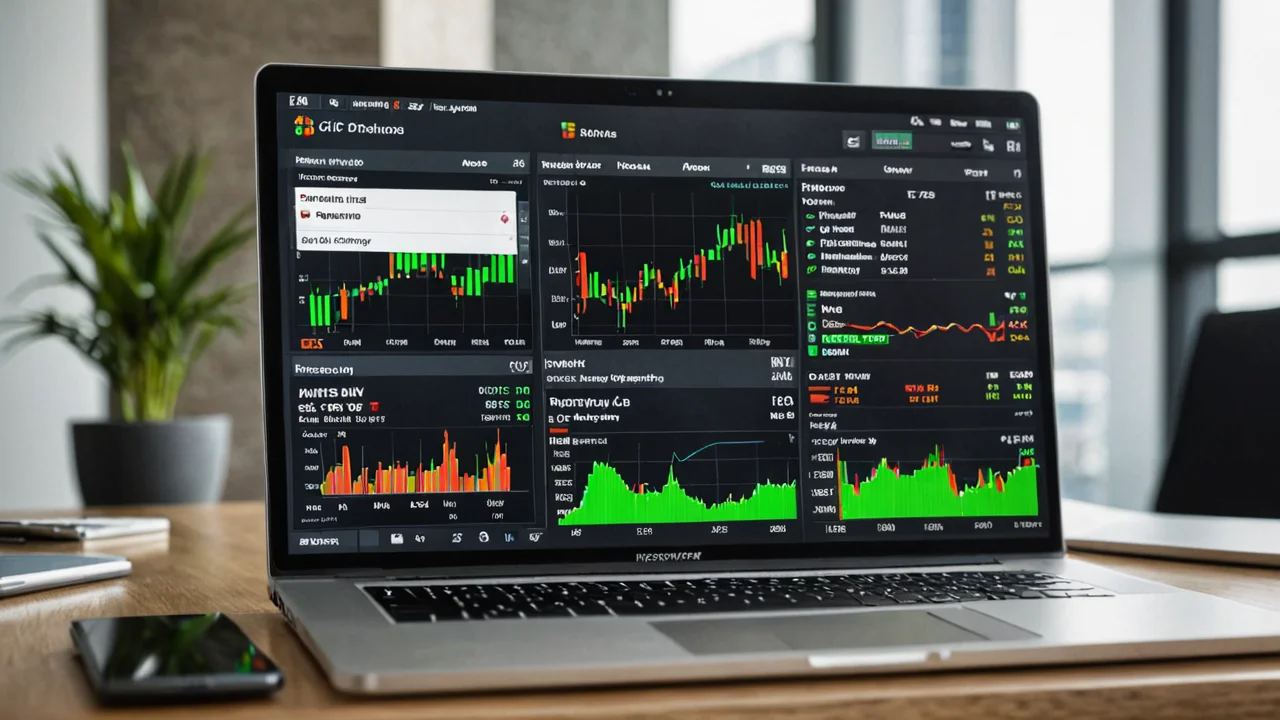
A demo account on Deriv is a practice environment that mirrors the live platform. You get the same charting, the same order tickets, the same asset list, and the same payout mechanics. The only difference is that the money on screen is virtual.
That distinction matters more than most beginners assume. Because the interface is identical, the demo is genuinely useful for learning where buttons sit, how contract durations work, and how a multiplier position behaves when the market moves against you. Nothing about the layout is simplified or "training mode".
Deriv's product range is broad, and the demo covers the main categories: options and multipliers through the proprietary platforms, plus CFDs on forex, indices, commodities and synthetic indices. Synthetic indices are the standout feature here, since they run 24/7 and do not depend on any real-world market being open.
- Options and multipliers on Deriv Trader and Deriv GO
- CFDs on forex, indices and commodities via Deriv MT5 and cTrader
- Synthetic indices available around the clock, including weekends
- The same account dashboard, deposit and withdrawal menus as a live account
Key Takeaway: The Deriv demo is not a stripped-down sandbox. It is the live platform with virtual funds, which is exactly why it is worth using properly rather than clicking around for ten minutes.
Lower minimums on Stockity
Start with as little as $10 (~₹500).
How to Open a Deriv Demo Account in Kenya
Opening a demo is the lowest-friction part of the whole process. You do not need to deposit anything, and you do not need to complete full identity verification just to look around.
The usual flow looks like this. You register on the Deriv site or through the mobile app, choose the demo option when prompted, and the platform issues you a virtual balance. From there you pick an instrument, set your stake or lot size, and place the trade.
Kenyan traders typically register with an email address or a phone number. If you plan to fund a real account later, using the same details from the start avoids a mismatch when verification comes around.
- Register with an email or phone number
- Select the demo account option during setup
- Receive a virtual balance and start placing practice trades
- Keep your registration details consistent if you intend to go live later
One practical note: Deriv lets you hold both a demo and a real account under the same login, so you can switch tradeween them without creating a second profile. That is convenient, but it also means it is easy to lose track of which account you are trading. Check the account label before every order.
Key Takeaway: A Deriv demo account in Kenya requires no deposit and no full verification. Register once, and the same login can later carry a real account alongside the demo.
Open in minutes
No paperwork — email + password is enough.
What You Can and Cannot Do on the Demo
The demo is generous, but it is not a full replica of live trading. Understanding the gaps early prevents nasty surprises later.
What you can do is broad. You can trade the full instrument list, test different contract types, experiment with stake sizing, and watch how payouts are calculated on synthetic indices. For anyone learning the mechanics of options and multipliers, this is the core value.
What you cannot do is replicate the psychology. Virtual money does not produce the same hesitation before a large position, and it does not produce the same regret after a loss. Traders who perform well on demo sometimes find their results change sharply once real funds are involved.
- You can test every major product category and platform
- You can practise position sizing and stop placement without cost
- You cannot reproduce the emotional weight of real capital
- You cannot assume demo results will carry over unchanged
There is also a practical limitation around funding mechanics. Deposit and withdrawal flows, including M-Pesa, are tied to the real account. The demo does not exercise those steps, so the first time you use mobile money on Deriv will be on a live account.
Key Takeaway: Use the demo to learn the platform and the products, not to prove you will be profitable. The skills that transfer are mechanical, not emotional.
Try Stockity for yourself
Free demo first; switch to real money when ready.
Demo vs Real Account: The Differences That Matter
The obvious difference is the money. The less obvious differences are the ones that catch people out.
On a real account, your balance is your own capital, and losses are permanent. On demo, a bad trade costs nothing and you can reset the balance. That single fact changes how you size positions, how long you hold, and how quickly you cut a losing trade.
Real accounts also bring the compliance layer. Identity verification, payment method checks and residency confirmation all apply once real funds are involved. For Kenyan clients, accounts are served through Deriv's offshore entities rather than a locally licensed one, which is worth understanding before you deposit.
- Demo balance is virtual and resettable; real balance is not
- Real accounts require identity and payment verification
- Real accounts involve actual deposit and withdrawal flows, including M-Pesa
- Residency determines which entity holds your account, and that affects the protections available to you
The minimum deposit to move from demo to real is commonly cited at USD 5, and Deriv's own options page notes that trades can start from as little as USD 1 provided the account holds at least USD 5. That is a low bar, which is precisely why the demo deserves more than a casual visit before you cross it.
Key Takeaway: The demo removes financial risk, not trading risk. Treat the transition to a real account as a change in discipline, not just a change in balance.
Faster onboarding on Stockity
Same-day KYC for most India users.
Moving From Demo to a Real Deriv Account
Switching is straightforward once you decide to do it. The demo account stays available, and a real account is added alongside it under the same login.
The steps are: complete your profile details, submit identity documents, choose a base currency, and make your first deposit. Kenyan traders can fund through M-Pesa, which is described in Deriv's payment guides as instant and free of fees on the broker's side. Other mobile money channels and local vouchers are also listed in the payment catalogue.
Before you deposit, decide on two things. First, how much you are willing to lose entirely, because high-leverage products on synthetic indices can move fast. Second, which contract types you actually understand, because the demo let you try things you may not be ready to fund.
- Complete profile and identity verification
- Select a base currency for the account
- Fund via M-Pesa or another supported channel
- Start with position sizes far smaller than your demo habits
Leverage is the other consideration. Reviews of Deriv commonly cite leverage up to 1:1000 on major forex pairs for retail clients outside strict onshore jurisdictions, including Kenya. That figure is not a target. It is a ceiling, and using it fully on a small account is one of the fastest routes to a margin call.
Key Takeaway: Fund the real account with money you can afford to lose, and size your first live trades well below what felt normal on demo.
Account ready in 60 seconds
Instant access; trade in demo or live mode.
Common Mistakes Kenyan Traders Make With the Demo
Most demo accounts are wasted, not because the tool is weak, but because it is used without a plan.
The first mistake is treating the demo as a game. Traders open enormous positions because the balance is virtual, then carry those sizing habits into a real account and blow up within days. The demo balance is not a budget to spend freely. It is a rehearsal.
The second mistake is skipping the boring parts. Learning where the stop-loss sits, how to read the contract duration, and what happens at expiry are exactly the things the demo exists to teach. Skipping them means learning them with real money.
- Oversizing positions because the funds are virtual
- Ignoring the payout structure on synthetic index options
- Never testing a losing streak to see how it feels
- Jumping to live trading after a short winning run on demo
A third issue is unrealistic expectations about returns. Binary-options style products have a well-documented risk profile globally, and independent reviews consistently flag options and multipliers on synthetic indices as high risk and unsuitable for inexperienced traders. The demo will not tell you that. It will happily show you a winning streak.
Key Takeaway: Give the demo a purpose. Set a virtual starting balance, trade it as if it were real, and track whether your approach survives a losing week.
Learn more about sign up in our sign up guide.
Smoother user experience
Login, deposits, and KYC just work.
Frequently Asked Questions
-
Do I need to deposit money to open a Deriv demo account in Kenya?
A: No. The demo account is funded with a virtual balance and requires no deposit. You can register and start practising without completing full identity verification, though you will need to verify if you later open a real account.
-
What is the minimum deposit to move from a Deriv demo to a real account?
A: A commonly cited minimum deposit for Deriv accounts is USD 5, particularly through e-wallets and mobile-money channels. Deriv's options page also notes that trades can start from as little as USD 1 provided the account holds at least USD 5.
-
Can I use M-Pesa on a Deriv demo account?
A: No. M-Pesa deposits and withdrawals apply to real accounts. Deriv's payment guides describe M-Pesa funding for traders in Kenya and Tanzania as instant and free of fees on the broker's side, but the demo does not exercise deposit or withdrawal flows.
-
Does the demo account cover synthetic indices?
A: Yes. Synthetic indices are a core part of Deriv's product line and are available on the demo. They trade 24/7, including weekends, which makes them a common starting point for Kenyan traders practising on virtual funds.
-
Will my demo results predict my real trading results?
A: Not reliably. The platform mechanics are identical, so you can learn the products and the interface. What the demo cannot reproduce is the emotional weight of trading real capital, which is often what changes a trader's behaviour.
-
Can I keep the demo account after opening a real one?
A: Yes. Deriv allows a demo and a real account under the same login, so you can switch tradeween them. Check the account label before placing an order, since it is easy to lose track of which one is active.
-
Is Deriv regulated for Kenyan clients?
A: Deriv operates through multiple regulated entities, but none of the sources reviewed indicate a Kenyan licence. Kenyan clients appear to be served through offshore entities, so it is worth confirming which entity holds your account and what protections apply before depositing.